Last updated: 2026-09-06 · Sino East Steel Technical Team
Scaffolding Systems for Indonesia: The Complete 2026 B2B Buying Guide
If you are a contractor, project manager or purchasing officer working on construction, mining, energy or infrastructure projects in Indonesia, this guide is written for you. Scaffolding systems — scaffolding Indonesia contractors rely on every day — are the invisible backbone of safe work at height, and choosing the right supplier can decide whether your project finishes on schedule or stalls in a maze of rejected deliveries, missing certifications and unsafe equipment.
In this comprehensive buying guide we cover every decision point a B2B buyer faces: which scaffolding system type fits your project, what the EN 39 and BS 1139 standards actually require, how to read a 48.3 mm tube specification, what a complete component set looks like, which certificates you must verify before payment, and how pricing, MOQ and lead time work for shipments from China to Jakarta, Surabaya and Belawan. By the end you will be able to send a professional enquiry that suppliers can quote accurately the first time.
Need a quotation for your project? Send us your scaffolding requirements — tube sizes, system type, quantity and destination port — and our export team will reply within 24 hours with a complete FOB/CFR quotation.
Why Indonesia Is One of Southeast Asia’s Fastest-Growing Scaffolding Markets
Indonesia is in the middle of the largest construction boom in its history, and scaffolding demand is growing with it. The relocation of the national capital to Nusantara (IKN) on the island of Kalimantan has opened a decade-long pipeline of government buildings, roads and utilities. Downstream nickel and smelter projects across Sulawesi and Maluku continue to attract billions of dollars in investment, and each industrial plant needs extensive temporary works — formwork shoring, access scaffolds and maintenance platforms — during construction and after commissioning. Meanwhile, the national infrastructure budget remains among the highest in ASEAN, funding toll roads, ports, airports and railway projects from Sumatra to Papua.
For international suppliers, this creates a sustained demand for galvanized scaffolding tube, system scaffolding and accessories. Indonesian buyers increasingly compare local distributors with direct-from-China sourcing, because project-scale orders of 50 to 500 metric tons make the price difference decisive. That is exactly why companies like Sino East Steel, a Tianjin-based manufacturer and exporter since 2008 with its own galvanizing lines and quality-control laboratory, have built dedicated Indonesia export programs with Indonesian-language documentation and Jakarta-oriented logistics.
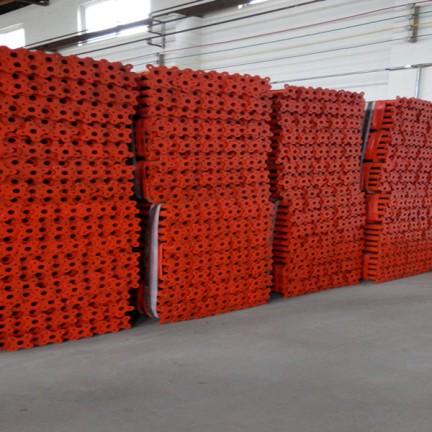
Scaffolding Systems Explained: Which Type Fits Your Project?
Before you compare prices, you need to know which scaffolding system your project actually requires. There are four families in common use on Indonesian sites, and each has different procurement profiles, price levels and safety characteristics.
Tube and Coupler Scaffolding (Independent Scaffold)
This is the traditional system built from loose steel tubes connected with couplers (clamps). It is extremely flexible, can adapt to any facade geometry, and remains the most common system for building facades and renovation work. Its main drawback is labour intensity: erection requires skilled workers and more time than prefabricated systems. For procurement purposes it is the simplest order — standard tubes, right-angle couplers, swivel couplers, base jacks and boards — and it is usually the most affordable per square metre of scaffold.
Frame Scaffolding (H-Frame / Door Frame)
Prefabricated frames that lock together vertically, connected with cross braces and ledger pins. Frames are the fastest system to erect, which is why they dominate commercial and residential construction in Indonesia. They are popular with contractors who erect and dismantle the same scaffold many times. Components include the frame itself, cross braces, base plates, adjustable jacks, tie bars and plank platforms. Frame systems are typically galvanized for outdoor durability, and the 48.3 mm tube standard still governs the frame’s uprights.
Ringlock and Cuplock Systems (Modular)
These are modular systems where horizontals connect into rings or cups welded onto the vertical standards at 500 mm intervals. Ringlock and cuplock scaffolds are the systems of choice for heavy civil works, shoring towers and industrial maintenance because they carry very high loads and are erected without loose fittings — the connection is clicked or wedged in place. They are more expensive per kilogram than tube-and-coupler, but labour savings on large projects often outweigh the material premium.
Shoring and Heavy-Duty Support
For concrete slab formwork, bridge falsework and heavy loads, engineers specify engineered shoring towers built from heavy-duty frames or ringlock standards with adjustable U-heads and base jacks. This is a specialised purchase usually made against a shoring design by a structural engineer — always request the load tables from your supplier before committing.
| System | Best For | Erection Speed | Load Capacity | Relative Cost |
|---|---|---|---|---|
| Tube & Coupler | Facades, irregular geometry, maintenance | Slow (skilled labour) | Medium–High | € |
| Frame (H-Frame) | Commercial & residential construction | Very fast | Medium | €€ |
| Ringlock / Cuplock | Heavy civil, shoring, industrial | Fast | Very High | €€€ |
| Shoring Towers | Formwork support, bridges | Medium | Extreme (engineered) | €€€€ |
The Backbone: EN 39 Galvanized Steel Tube 48.3 mm
Whatever system you choose, the vertical and horizontal tubes are overwhelmingly the 48.3 mm outer-diameter steel tube defined by the European standard EN 39 and its predecessor BS 1139. This diameter is a de facto worldwide scaffold standard, and compatibility between tube, couplers and system connections depends on it. Understanding the specification protects you from a very common export mistake: ordering pipe that looks right but fails the coupler grip test.
The critical dimensions of EN 39 tube are:
- Outside diameter: 48.3 mm (1.9 inches) — with a tight tolerance that guarantees coupler compatibility.
- Wall thickness: 4.0 mm nominal for standard duty (EN 39 gives 3.2 mm and 4.0 mm classes; 4.0 mm is the overwhelming choice for export orders).
- Weight: approximately 4.37 kg per metre for 4.0 mm wall.
- Grade: S235JR per EN 10025, equivalent to mild steel, with minimum yield strength of 235 MPa.
| Tube Spec (EN 39) | Value |
|---|---|
| Outside Diameter | 48.3 mm |
| Wall Thickness | 3.2 mm / 4.0 mm |
| Weight (4.0 mm) | ≈ 4.37 kg/m |
| Standard Lengths | 6.0 m (2 m / 3 m / 4 m / 5 m available) |
| Surface | Black (oiled) or Hot-Dip Galvanized |
| Yield Strength | 235 MPa (S235JR) |
| Galvanizing | EN ISO 1461, ≈ 500–600 g/m² |
Two surface options exist. Black tube is cheaper, supplied oiled or painted, and is normally used indoors or for short-term hire stock. Galvanized tube carries a zinc coating of roughly 500–600 g/m² per EN ISO 1461, giving years of service outdoors — essential for Indonesia’s tropical humidity, coastal salt air and monsoon exposure. If your scaffold will remain installed for months, or will be re-used across multiple projects, the galvanized premium pays for itself within two rental cycles.
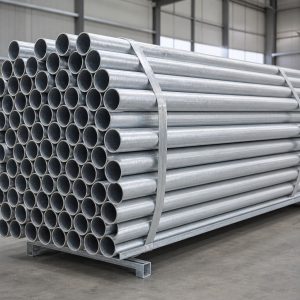
Galvanized vs Black Tube: What Indonesian Contractors Should Decide
The galvanized-versus-black decision is a cost-versus-durability trade-off that many Indonesian buyers get wrong at first order. On price, black tube is roughly 10–15% cheaper per ton. On total cost of ownership, however, galvanized tube dominates for anything exposed to weather. Indonesia’s climate — high humidity year-round, heavy monsoon rain, and coastal corrosion within kilometres of the sea — is among the most punishing environments for unprotected steel in the world. Black tube stored outside will show rust within weeks and can pit within a season, reducing its resale value and eventually its safety margin.
There is also a safety dimension. Corrosion thins the wall of a scaffold tube, and a tube that has lost a millimetre of wall no longer meets the load assumptions of the design standard. Contractors in Indonesia have faced site inspections — by owner safety departments, government labour inspectors or international joint-venture partners — that reject visibly corroded equipment outright. Galvanizing removes that argument. For hire companies, galvanized equipment holds its second-hand value dramatically better and commands higher rental rates because it looks professional on site.
Our recommendation for Indonesia: choose hot-dip galvanized EN 39 tube for outdoor scaffold projects, and reserve black tube for controlled indoor use or where your client explicitly accepts it. When you request a quotation, ask for the zinc coating weight certificate — a genuine EN ISO 1461 coating of 500 g/m² or more is the difference between five years of service and two.
The Complete Component List: What a Scaffolding Order Actually Contains
First-time buyers often underestimate how many component types a complete scaffold requires. If you are sourcing from China, components are usually consolidated into container loads, so the bill of materials matters as much as the tube price. A typical independent (tube-and-coupler) scaffold bill includes:
- Scaffolding tube — standards (vertical), ledgers (horizontal) and transoms, mostly 48.3 mm EN 39 tube in 6 m lengths.
- Right-angle couplers (double couplers) — the workhorse connection for tube-to-tube right angles; BS 1139 / EN 74 compliant, drop-forged or pressed steel.
- Swivel couplers — for diagonal bracing and non-right-angle connections.
- Sleeve couplers / joint pins — joining tube ends in the same line.
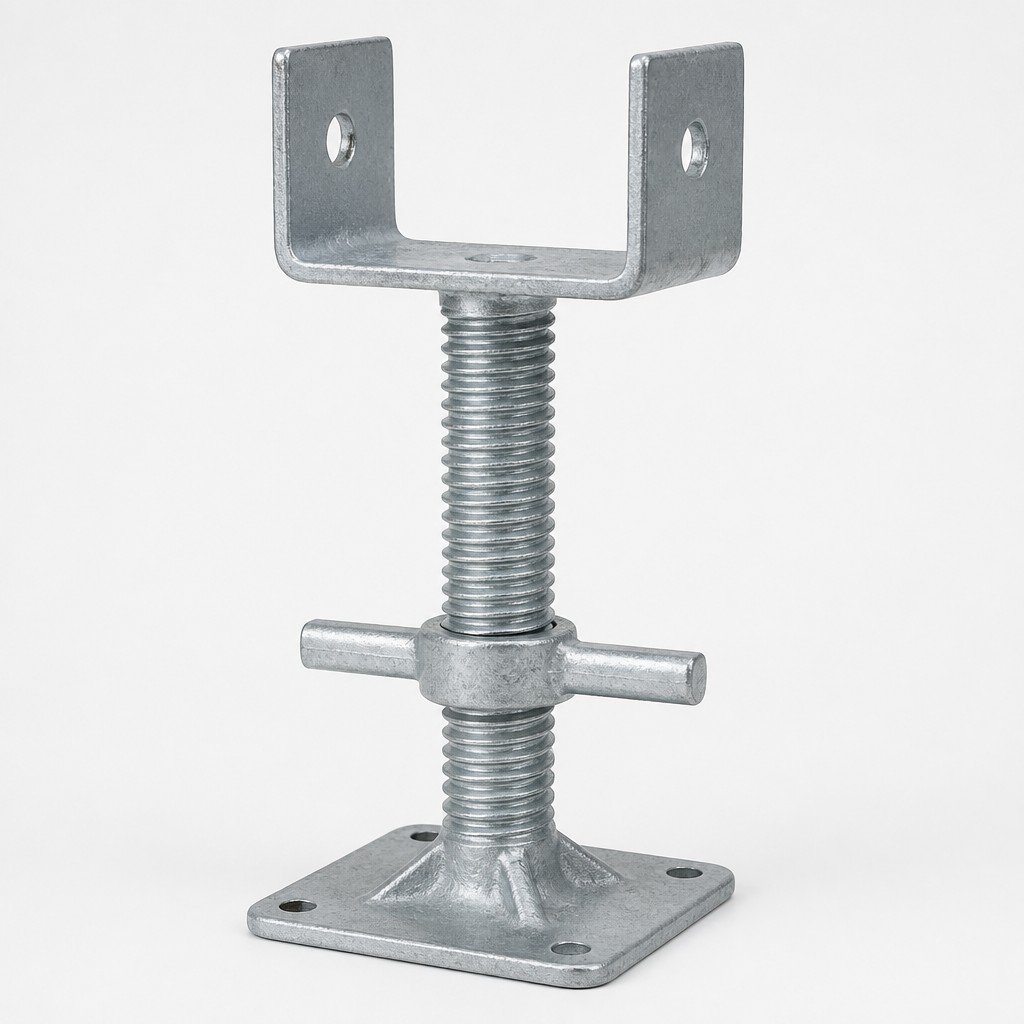
- Base jacks (adjustable base plates) and U-head jacks — for levelling on uneven ground and supporting beams or formwork.
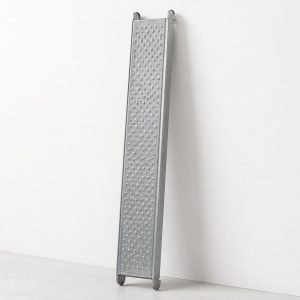
- Scaffold boards / planks — steel plank platforms, often galvanized with anti-slip perforations, in 2.4 m or 3 m lengths.
- Ladders, guardrails and toe boards — edge protection elements required by safe-work-at-height rules.
For frame systems, add frames, cross braces, tie bars and pin locks; for ringlock systems, the vertical standards are the skeleton, with rosettes every 500 mm accepting ledgers, transoms and diagonal braces without couplers. Do not forget fasteners, pin spares and a small percentage of contingency components — 2–3% extra of each line item is standard practice because couplers and small parts are the items that get lost fastest on site.
Safety Standards and Certifications Buyers Must Verify
Safety compliance is not paperwork — it is the difference between a project that passes inspection and one that stops. When you buy scaffolding from overseas, you are responsible for what lands on site, so verify these four things before payment:
- Product standard certificates: EN 39 for tube, EN 74 (or BS 1139) for couplers and fittings, EN 1004 for mobile access towers, and national standards such as AS 1576 where your client specifies them. Ask for the mill test certificate (MTC) showing the actual chemical composition and mechanical properties of each heat.
- Galvanizing certificate: EN ISO 1461 coating weight, verified by a third-party inspection where possible. This is the single most falsified document in scaffold exports — always order third-party inspection (SGS, BV, TÜV) on galvanizing when volumes justify it.
- Manufacturer credibility: ISO 9001 quality management, an export record to your region, and references from projects you can call. Sino East Steel, for example, publishes its factory history since 2008, its quality laboratory and its export destinations, and its scaffolding products are documented with full specifications on sesteel.id.
- Indonesia-specific adaptation: while Indonesia recognises international standards on most private projects, state-owned and joint-venture projects increasingly require SNI certification or compliance dossiers. Confirm with your client whether SNI-marked components are mandatory, and ask your supplier whether they can provide SNI-compliant documentation or third-party certification accepted by Indonesian labour inspectors.
A practical tip: ask for the coupler to be batch-tested for grip and proof load (EN 74 requires a proof load of 18 kN for right-angle couplers with 48.3 mm tube). The certificate trail from mill to coupler is what a serious client’s HSE department will audit.
Buying from China to Indonesia: Price Factors, MOQ and Lead Time
Price per ton is the headline number, but total landed cost decides the deal. When you compare quotations from different suppliers, break each offer into its components:
- Base price per ton by product: tube is priced per metric ton; couplers and fittings are usually quoted per piece or per thousand; frames and ringlock systems are quoted per set or per square metre of scaffold coverage.
- Price drivers: steel billet prices (which move with global iron ore and energy markets), hot-dip galvanizing capacity (zinc prices), the current export tax rebate policy, and container freight rates to Jakarta.
- MOQ: for direct mill export, realistic MOQs are 25–50 tons for mixed tube orders and 1–3 containers for full component sets. Sino East Steel accepts smaller trial orders (starting around 10 tons or a 20’ container) to let new Indonesian buyers validate quality before committing to project-scale volumes.
- Lead time: 20–45 days from order confirmation to port loading, depending on product mix and galvanizing schedule; add 10–20 days for sea freight to Tanjung Priok (Jakarta), Tanjung Perak (Surabaya) or Belawan (Medan), plus customs clearance.
- Trade terms: FOB Tianjin/Xingang is the common baseline for China exports; CFR and CIF to Indonesian ports are easily arranged; DDP to site in Java is possible for experienced forwarders.
Planning a scaffolding purchase for Indonesia? Tell us your system type, quantities and destination port — get a detailed FOB/CFR quotation and a checklist of exactly what you need to receive.
How to Calculate Scaffolding Quantities for Your Project
Accurate quantities are the difference between a profitable bid and a costly surprise. These planning rules-of-thumb help you estimate before the detailed design:
- Tube per square metre of facade scaffold: a standard independent scaffold with 1.8 m lift height and 1.2 m bay width consumes roughly 10–12 linear metres of tube per square metre of scaffold face, including standards, ledgers and transoms plus bracing allowance.
- Couplers per tube: plan on 12–15 couplers per standard bay junction pattern — a typical 1.8 m lift consumes approximately 20 couplers per bay when all connections are counted.
- Boards: one plank line per working lift; two-board width is standard for light duty, three-board for heavy.
- Weight conversion: 6 m × 4.37 kg/m = 26.2 kg per length of EN 39 tube — multiply by your linear metre count for the tonnage.
When in doubt, add 5% contingency and ask your supplier for a loading plan per container. A 20’ container holds roughly 22–24 tons of scaffold tube; a 40’ high-cube holds roughly 26–28 tons due to length constraints on 6 m tube. Suppliers experienced in Indonesia logistics can usually tell you within a few tons how many containers your order needs — a useful cross-check on their pricing.
Frequently Asked Questions
1. What scaffolding standard is used in Indonesia?
Private construction in Indonesia predominantly follows international standards: EN 39/BS 1139 for tube and fittings, EN 74 for couplers, and AS 1576 or OSHA-style rules for system design. State-owned and JV projects increasingly ask for SNI certification — confirm with your client before ordering, and choose a supplier able to provide third-party certificates accepted locally.
2. What is the difference between EN 39 and ASTM A53 scaffold pipe?
EN 39 is the dedicated European scaffold tube standard: 48.3 mm OD, defined wall classes (3.2 mm and 4.0 mm) and tight tolerances engineered for coupler compatibility. ASTM A53 is a general pressure pipe standard sometimes used for scaffolding but without EN 39’s scaffold-specific dimensional and straightness tolerances. For scaffold use, EN 39 tube is the correct specification.
3. How much does galvanized scaffolding tube cost delivered to Jakarta?
Prices move weekly with steel billet, zinc and freight markets. As a planning range in 2026, EN 39 galvanized tube typically lands in the low-to-mid US$700–900 per ton range CFR Jakarta depending on volume, wall thickness and coating weight — but always request a current quotation; we will quote the same day with the mill’s latest price.
4. Can I buy a trial order before committing to project volumes?
Yes. Sino East Steel accepts trial orders from about 10 tons or a 20’ container so you can verify quality, documentation and delivery before scaling up to 100+ ton project orders. Many Indonesian importers start exactly this way.
5. What documents will I receive with a scaffolding export order?
A complete export file includes: commercial invoice, packing list, bill of lading, mill test certificates for each heat, EN ISO 1461 galvanizing certificates, and where ordered, third-party inspection reports (SGS/BV/TÜV) with photos. Original certificates are couriered with the shipping documents.
6. How long does shipping from China to Indonesia take?
From Tianjin/Xingang to Tanjung Priok (Jakarta) direct sailings typically take 7–12 days; to Tanjung Perak (Surabaya) or Belawan (Medan) slightly longer, often with transhipment. Add 20–45 days of production lead time and a few days for customs clearance in Indonesia.
Sources & References
Standards and data referenced on this page: