Last updated: 2026-08-14 · Sino East Steel Technical Team
ERW Pipe vs Seamless Pipe: the complete technical guide to choosing carbon steel pipe in Indonesia. Carbon steel pipe for water, structural, and general industrial applications is generally available in two main production methods: electric resistance welded (ERW) pipe and seamless pipe. The difference in production method produces real differences in cost, size availability, wall tolerance, weld strength, and application suitability. This article compares the two in depth – including ASTM A53, EN 10219, and API 5L standards – so importers, contractors, and distributors in Indonesia can make the right decision for their projects.
Sino East Steel produces both ERW and seamless pipe at our Tianjin factory, with 500,000 tons of annual capacity and 18+ years of export experience to 50+ countries. We supply Indonesia with sea freight of 18-25 days to Tanjung Priok, Tanjung Perak, Belawan, and Makassar, accompanied by an MTC per EN 10204 3.1, optional SGS/BV/TUV inspection, and SNI documentation support.
What Are ERW Pipe and Seamless Pipe?
ERW pipe is produced from steel coil (hot-rolled strip) formed into a cylinder, with the two edges joined by high-frequency electric resistance welding. This continuous, fast, and efficient process produces pipe with excellent dimensional tolerances and low production cost. Modern high-quality ERW weld lines are almost invisible and pass hydrostatic and non-destructive testing (NDT) before shipment.
Seamless pipe is produced from a solid steel billet that is heated, pierced, and rolled into pipe without any joint. The absence of a weld seam eliminates potential weak points, making seamless pipe the standard choice for high-pressure, high-temperature, and critical service. However, the process is slower, more expensive, and wall tolerances are generally less precise than ERW in small and medium sizes.
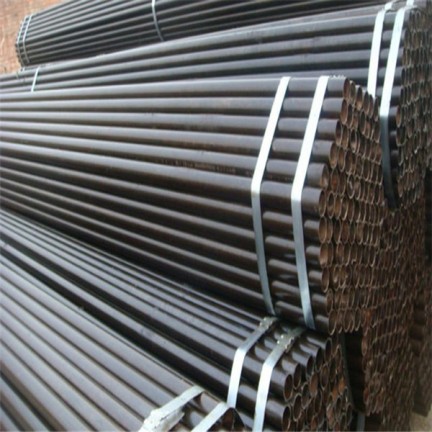
ERW vs Seamless Pipe: Comparison Table
The table below compares the key aspects of both production methods:
| Aspect | ERW Pipe | Seamless Pipe |
| Production Method | High-frequency electric resistance welding from steel coil | Billet piercing and rolling of solid steel |
| Standards | ASTM A53, EN 10219, API 5L, BS 1387 | ASTM A106, ASTM A53, API 5L |
| Weld Seam | Present (but modern NDT ensures integrity) | None |
| Strength Under Pressure | Good for general service | Superior, uniform across cross-section |
| Dimensional Tolerance | Very good (precise coil) | Good (less precise on thin walls) |
| Production Cost | Low – economical for volume | High (10-25% more expensive) |
| Size Range | OD 1/2 in – 24 in (thin-medium walls) | OD 1/4 in – 24 in+, thick walls available |
| Typical Applications | Water, structures, scaffolding, fencing, general piping | Boilers, hydraulics, oil & gas, chemical, high pressure |
| MOQ | 20-25 tons per container | 20-25 tons per container |
| Lead Time | 15-20 days | 20-30 days |
Both products are legitimate for many of the same applications – standards like ASTM A53 and API 5L permit both – but the final choice depends on working pressure, project inspection, and budget. Here is a deeper analysis of each.
Advantages and Limitations of ERW Pipe
The main advantages of ERW pipe are economy and precision: low production cost, tight diameter and wall tolerances, smooth surface, and wide availability of common sizes with short production times. For general construction applications – water lines, scaffolding, fencing, light structures, and HVAC piping – ERW pipe offers the best value. Modern high-frequency ERW technology produces welds with metallurgical properties close to the parent material, and NDT ensures weld integrity.
Limitations: the weld seam is a controlled variable – although modern quality is excellent, some project standards or inspectors still require seamless for critical service. For very thick walls or extreme corrosion applications, ERW is less common. For very high pressure above standard design limits, specifications often direct to seamless or LSAW.
Advantages and Limitations of Seamless Pipe
The main advantage of seamless pipe is reliability under extreme pressure and temperature: without a weld seam, there is no weak point where failure can initiate. Seamless is the de facto standard for boilers, superheaters, heat exchangers, hydraulic systems, and oil and gas line pipe (API 5L). The ability to withstand higher pressure with thinner walls saves material in critical applications. For EPC projects in Indonesia’s energy sector, seamless is often a specification requirement.
Limitations: higher cost (10-25%), longer production time, and less precise tolerances on thin walls compared to ERW. Using seamless for applications that do not actually need it (water, fencing, general structures) is a budget waste without technical benefit.
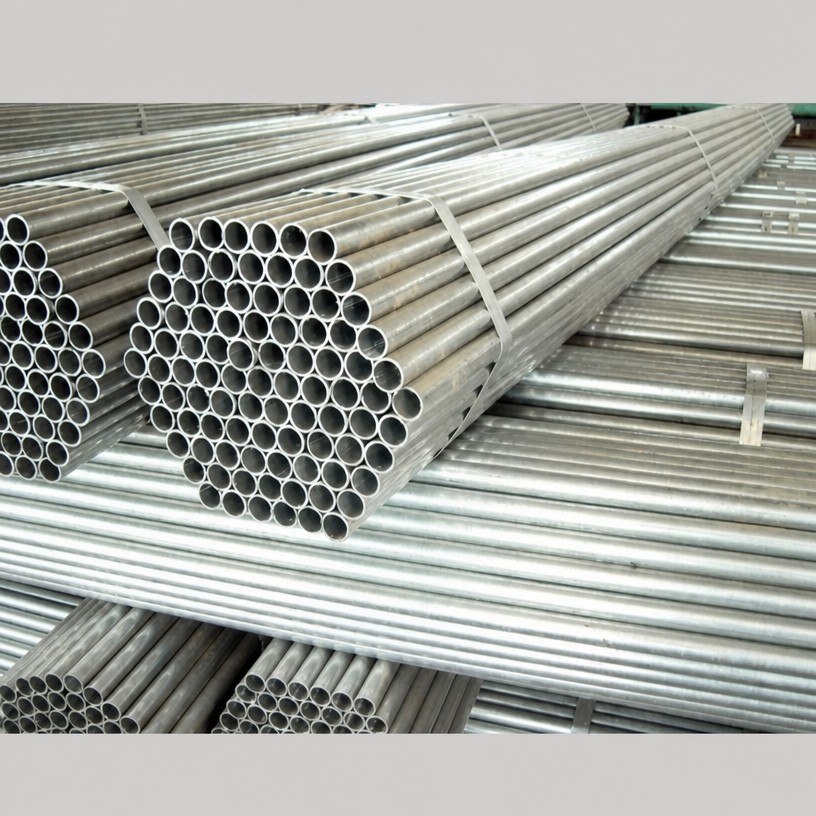
When to Choose ERW Pipe
Choose ERW pipe when the project needs general piping at optimal cost: potable water and wastewater lines, fire protection systems, scaffolding, fencing, railings, light structures, and HVAC piping. For large volumes of standard sizes, ERW delivers significant savings. ASTM A53 and EN 10219 permit ERW pipe for general pressure service, and with hydrostatic and NDT testing, our ERW pipe meets strict technical requirements.
When to Choose Seamless Pipe
Choose seamless pipe when there are critical pressure, temperature, or specification requirements: boilers and power plants, heat exchangers, high-pressure hydraulic systems, oil and gas pipelines (API 5L PSL1/PSL2), chemical industries, and offshore applications. If the project document explicitly requires “seamless”, use seamless – this decision is usually driven by inspection and project insurance considerations, not just technical ones.
Price Comparison and Market Availability
ERW pipe is generally 10-25% cheaper than seamless pipe of the same size, due to production process efficiency. The price gap is largest for thin walls (SCH 10-40) and narrows for thick walls. Availability: standard-size ERW pipe (1/2-8 inches) is almost always available from stock or with short production times; large-diameter or thick-wall seamless requires earlier planning. For projects with combined volumes, order both at once to consolidate shipping.
Standards, Certification, and SNI Compliance
Our ERW pipe meets ASTM A53 Grade B, EN 10219, BS 1387, and API 5L; seamless pipe meets ASTM A106 Grade B, ASTM A53, and API 5L PSL1/PSL2. Tests include chemical analysis, tensile, bend, flattening (ERW), hydrostatic, and NDT (ultrasonic/eddy current) for ERW. An MTC per EN 10204 3.1 accompanies every shipment with traceable heat numbers. For SNI-standard projects in Indonesia, we prepare the required supporting documentation.
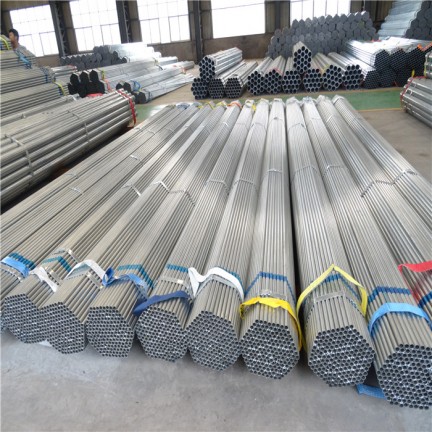
Specifications and Size Range: ERW vs Seamless
Our ERW pipe is available with an outer diameter of 1/2 inch to 24 inches, walls of 0.6-16 mm, and lengths of 6-12 meters; seamless pipe ranges from 1/4 inch to 24 inches with walls up to 50 mm. On thin walls (SCH 10-40), ERW provides more precise tolerances and a smoother surface – beneficial for dimension-sensitive applications like scaffolding and water systems. On thick walls (SCH 80 and above) and large sizes, seamless dominates due to coil forming limitations in ERW. Pipe ends can be supplied plain, beveled, or threaded as required.
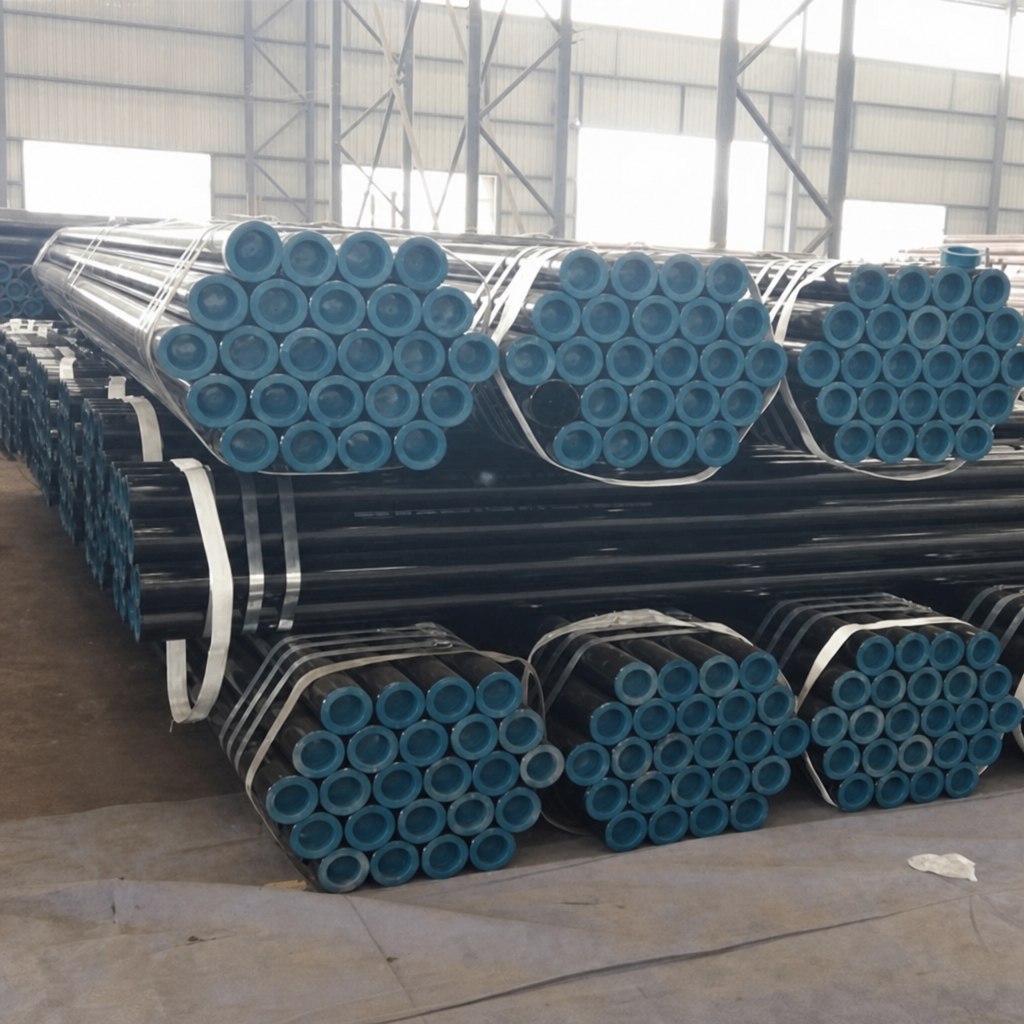
Testing and Shipping Documentation
All pipe is tested to the ordered standard: chemical analysis, tensile, bend, flattening (ERW), hydrostatic, and NDT (ultrasonic or eddy current) to verify ERW weld integrity. An MTC per EN 10204 3.1 accompanies every shipment with heat numbers traceable to production. For projects requiring it, SGS, BV, or TUV inspection can be arranged at the mill before loading, with inspection reports sent before departure. Export documentation – invoice, packing list, certificate of origin, and customs documents – is prepared completely to facilitate import in Indonesia.
Applications in Indonesia: Construction and Industry
In Indonesia, ERW pipe dominates the construction market: scaffolding for tower and bridge projects, fencing, water lines, and light steel structures. Seamless pipe is used in the energy and heavy industry sectors: power plants, refineries, oil and gas facilities, and chemical plants – concentrated in Cilegon, Balikpapan, and Dumai. National distributors in Jakarta and Surabaya stock both types to serve contractors who need both on one project.
Decision Factors for Importers and Distributors
Five key considerations: (1) Operating pressure and temperature – design limits determine the production method; (2) Project specification requirements – some documents specify seamless for critical lines; (3) Budget – ERW saves 10-25% for general applications; (4) Size and wall – thick walls or non-standard sizes are easier in seamless; (5) Availability – ERW lead times are shorter for common sizes. Partnering with a factory that produces both (like Sino East Steel) provides the greatest flexibility and a single quality responsibility.
Beyond the five factors above, also consider after-sales support: a supplier with responsive technical support, clear complaint handling, and consistent documentation makes a real difference when issues arise at the project site. Ask for references from other Indonesian importers and check how the supplier handles quality claims before you commit to a long-term relationship.
Common Mistakes and How to Avoid Them
The most common mistakes in the field: first, assuming all ERW pipe is “low quality” – this perception comes from old ERW technology; modern high-frequency ERW with NDT offers equivalent reliability for most applications, and standards like ASTM A53 and API 5L permit its wide use. Second, ordering seamless without verifying heat numbers and MTC – critical projects require full traceability, and suppliers who cannot show heat numbers should be avoided. Third, skipping pre-shipment inspection for large projects – well-scheduled SGS/BV/TUV inspection prevents rejection at the destination port and costly quality disputes. Choose a supplier that is transparent about production and willing to accept factory audits.
Frequently Asked Questions (FAQ)
Answers to common questions:
1. Is ERW pipe weaker than seamless?
Not significantly for general applications. Modern high-frequency ERW technology produces welds close to parent material strength, and NDT ensures integrity. For very high pressure and critical service, seamless remains the standard because of uniform cross-section without joints.
2. Why is seamless more expensive?
The seamless manufacturing process (billet piercing) is slower and wastes more material than continuous coil forming in ERW, so the cost per ton is 10-25% higher.
3. Can ERW pipe be used for pressurized water?
Yes. ERW pipe to ASTM A53 Grade B meets general pressurized water piping requirements. For working pressures above standard design limits or critical service, consult your project specification and engineer.
4. How can I tell ERW and seamless pipe apart visually?
ERW pipe has a smooth longitudinal weld line visible on the inner/outer surface; seamless pipe has no weld line at all. Metallographic testing or inner-surface inspection can confirm.
5. Does API 5L permit ERW pipe?
Yes, API 5L covers welded (ERW, HFW, SAW) and seamless line pipe. Selection is determined by project specification, operating pressure, and service class (PSL1/PSL2).
6. How do I order ERW and seamless pipe?
Send your specification (product, size, SCH/wall, length, grade, quantity, port) via WhatsApp +86 186 2208 8833 or the contact form. Our team responds within 24 hours with an official quotation.
How to Order from the Sino East Steel Factory
The ordering process: (1) Send technical specifications; (2) Receive a quotation within 24 hours; (3) Confirm the contract; (4) Production in 15-30 days; (5) Optional inspection; (6) Shipping to Indonesian ports. Every decision should be based on technical data and project requirements – our engineering team is ready to help you compare cost and performance objectively before ordering, including reviewing project specifications. For government water and infrastructure projects in Indonesia, specifications often reference SNI standards equivalent to ASTM A53 – make sure your supplier understands this mapping to smooth material approval. Sino East Steel supplies both pipe types from one factory, so combined orders simplify quality management, documentation, and logistics cost – our team is ready to help you determine the best choice for every project, and free consultation is always available before you commit to a specification. Learn more: Seamless Pipe Manufacturer, Galvanized Pipe Manufacturer, and ASTM A53 vs API 5L. For pipe ordered with special requirements such as additional NDT, third-party inspection, or specific packaging, please indicate this in your inquiry so we can include it in the quotation and production plan from the start. We are always ready to support your project with technical advice and reliable delivery.
Sources & References
Standards and data referenced on this page: