Last updated: 2026-08-14 · Sino East Steel Technical Team
PPGI Coil vs Galvanized Steel Coil: the complete guide for roofing, panel, and industrial buyers. When a project needs corrugated roofing sheets, wall panels, or coated metal components, buyers often face two main choices: galvanized steel coil (GI) and prepainted galvanized iron coil (PPGI). Both start from the same base material – cold-rolled steel coated with zinc – but the difference in finishing layers produces different appearance, durability, and cost. This article provides an in-depth technical comparison to help importers, distributors, and fabricators in Indonesia choose the right product for their projects.
Sino East Steel produces both products at our Tianjin factory in China: galvanized coil to ASTM A653 / A924 / EN 10346 and PPGI coil to ASTM A755 / EN 10169 with RAL color options. With 500,000 tons of annual capacity, 18+ years of export experience to 50+ countries, and sea freight of 18-25 days to Tanjung Priok (Jakarta), Tanjung Perak (Surabaya), Belawan (Medan), and Makassar, we deliver with an MTC per EN 10204 3.1 and optional SGS/BV/TUV inspection.
What Are Galvanized Steel Coil and PPGI Coil?
Galvanized steel coil is cold-rolled steel coated with pure zinc through a continuous hot-dip galvanizing process. The zinc coating (typically Z60-Z350 g/m2) provides cathodic protection, making GI coil the main raw material for roofing (before painting or coating), ducting, automotive components, home appliances, and various applications requiring basic corrosion resistance.
PPGI coil (prepainted galvanized iron) is galvanized coil subsequently coated with organic paint through a continuous coil coating process: cleaning, primer (anti-corrosion), top coat (typically polyester or PVDF), and optional protective film. The result is colored sheet metal ready to use – no on-site painting required, saving labor and time with consistent color appearance.
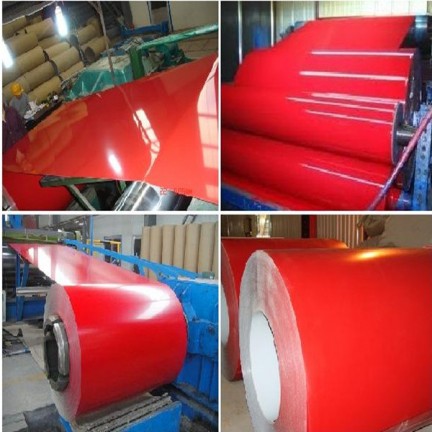
PPGI vs Galvanized Coil: Comparison Table
The table below summarizes the key differences between the two products:
| Aspect | Galvanized Steel Coil (GI) | PPGI Coil |
| Coating Structure | Pure zinc layer (hot-dip) | Zinc + primer + organic paint (coil coating) |
| Standards | ASTM A653, A924, EN 10346, JIS G3302 | ASTM A755, EN 10169 (RAL colors) |
| Appearance | Natural silver metallic | Colored, wide RAL range, controlled gloss |
| Corrosion Resistance | Good (cathodic zinc) | Very good (zinc + paint barrier) |
| UV / Weather Resistance | Limited (needs painting outdoors) | Good – excellent (polyester/PVDF) |
| Further Processing | Can be painted, formed, welded | Ready to use; forming must respect paint flexibility |
| Cost | Lower per ton | Higher (added coating process) |
| Typical Applications | Raw material for roofing, ducting, industrial parts | Spandek roofing, wall panels, fencing, interior |
| MOQ | 20-25 tons per container | 20-25 tons per container |
| Lead Time | 15-20 days | 20-30 days |
The choice between the two is almost always determined by the end application: whether your product will be painted or coated on site (choose GI), or needs ready-to-use weather-resistant color (choose PPGI). Here is a detailed discussion of both options.
Advantages and Limitations of Galvanized Steel Coil
The main advantage of GI coil is flexibility and low cost. As a raw material, GI coil can be formed, painted, welded, or further processed according to the fabricator’s needs. The zinc coating provides good basic protection, and for interior or protected applications, GI coil is often the most economical choice. The HVAC ducting industry, automotive components, and light structures rely heavily on GI coil.
Limitations: for outdoor applications exposed to sunlight and rain, the galvanized surface turns gray (zinc patina), and in highly corrosive coastal environments it still requires additional painting. If the project needs color, on-site painting adds labor cost, time, and inconsistent quality risks.
Advantages and Limitations of PPGI Coil
The main advantage of PPGI coil is aesthetics and weather resistance in one finished product. Paint applied through continuous coil coating has uniform thickness and quality – far more consistent than manual on-site painting. For spandek roofing and wall panels, PPGI eliminates the painting stage, speeds up installation, and provides clear color warranty. Premium PVDF coatings offer 20+ years of UV and weather resistance for tropical environments.
Limitations: higher price per ton, and forming (profiling) must be done carefully so the paint does not crack at small bend radii – fabricators need suitable equipment and must follow manufacturer technical parameters. Scratch repair on site requires special touch-up paint. Color availability also needs planning: non-standard colors are produced to order with longer lead times.
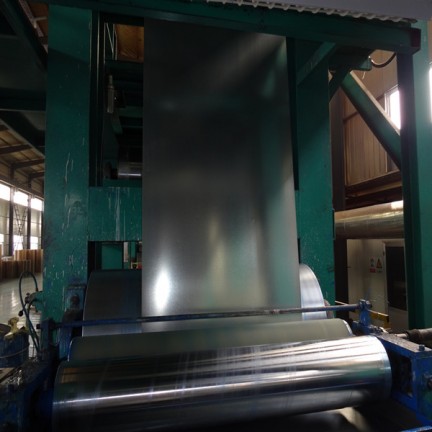
When to Choose Galvanized Steel Coil
Choose GI coil when: your product will be painted or coated on site (for example, fabricators with their own painting lines); the application is interior or protected; the need is industrial raw material (ducting, components, light structures); or when material cost per ton is the dominant factor. GI coil is also the right choice if you process the material further with welding that requires direct access to the steel surface.
When to Choose PPGI Coil
Choose PPGI coil when the project needs ready-to-use color: spandek roofing, metal tiles, wall panels, fencing, canopies, and architectural applications. For coastal Indonesian environments (North Java coast, Sulawesi, Bali) with high salt content, PPGI with Z275+ zinc and PVDF top coat delivers the best service life. PPGI also reduces project risk by removing the on-site painting variable and accelerating the installation schedule.
Price Comparison and Market Availability
PPGI coil generally costs 15-35% more than GI coil of the same thickness and grade, depending on zinc coating weight, top coat type (polyester vs PVDF), and color. Both prices are strongly influenced by LME zinc and cold-rolled steel prices. For large projects, we recommend ordering PPGI and GI together so production and shipping schedules can be consolidated – distributing freight costs more efficiently. Contact our team for current pricing FOB Tianjin or CIF to Indonesian ports.
Standards, Certification, and SNI Compliance
Our galvanized coil meets ASTM A653 / A924 and EN 10346 with Z60-Z350 g/m2 coating weight; PPGI coil meets ASTM A755 and EN 10169 with total paint thickness of 20-35 microns (primer + top coat) and RAL color options. All production runs under ISO 9001:2015, with coating weight, bend, salt spray, and adhesion testing. An MTC per EN 10204 3.1 accompanies every shipment, and third-party inspection is available.
For roofing products circulating in Indonesia, compliance with SNI 4096 (spandek roofing) and related standards is an important consideration for distributors. We provide test data and documentation supporting quality verification of your products in the Indonesian market.
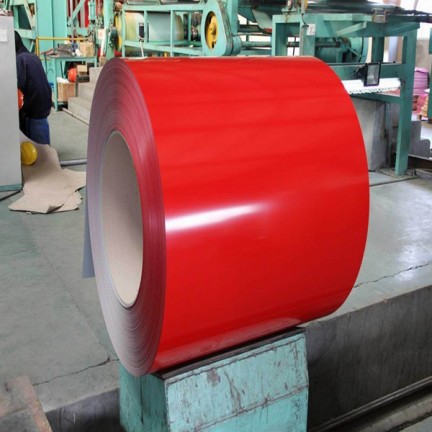
Applications in Indonesia: Roofing, Panels, and Components
In Indonesia, PPGI coil is the main raw material for the fast-growing spandek roofing and metal tile industry – driven by housing, warehousing, factory, and shopping center construction. Popular colors such as maroon red (RAL 3005), green (RAL 6005), and white (RAL 9016) dominate the market. GI coil is used as raw material for AC ducting, vehicle components, home appliances, and light structures. Distributors in Jakarta, Surabaya, and Medan combine both products in one container for inventory flexibility.
Thickness, Width, and Available Specifications
Our galvanized and PPGI coils are available in thicknesses of 0.16-2.0 mm and widths of 600-1250 mm (standard Indonesian spandek and metal tile widths are typically 914-1200 mm). For GI coil, zinc coating weight can be selected from Z60-Z350 g/m2; for PPGI, total paint thickness of 20-35 microns with polyester, silicon modified polyester (SMP), or PVDF top coats. The base steel is generally SPCC/DX51D with yield strength of 140-280 MPa. Coils are supplied with an inner diameter of 508 mm or 610 mm to suit your fabricating equipment, and every coil is labeled with heat number, thickness, weight, and coil number for full traceability.
Before mass production, we recommend a small trial order of 5-10 tons to verify color suitability, forming flexibility, and your roll forming machine parameters. Physical color samples can be sent before full production to confirm the color matches the approved RAL reference – a step that saves risk and cost on large orders.
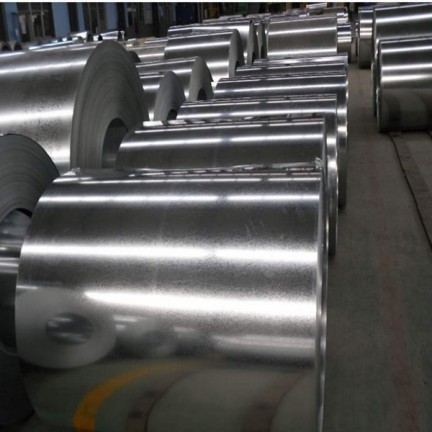
Logistics and Consolidated Shipping to Indonesia
Both products can be shipped separately or combined in one container. For distributors needing fast stock rotation, we recommend a consolidated monthly shipping program: GI coil as base stock and PPGI coil in popular colors as value-added stock. Sea freight from Tianjin to Tanjung Priok, Tanjung Perak, Belawan, or Makassar takes 18-25 days; other Indonesian ports can be served via transshipment in Singapore. Coils are packed with steel strapping, edge protectors, and waterproof wrapping – per ocean shipping standards to prevent white rust during transit.
Decision Factors for Importers and Distributors
Key considerations: (1) End application – ready-to-use color or raw material for reprocessing; (2) Installation environment – coastal exposure requires Z275+ and PVDF; (3) Color requirements – standard RAL colors are faster, special colors need lead time; (4) Volume and stock rotation – GI has a broader secondary market if stock exceeds demand; (5) Consistent quality – choose a factory that controls the whole process from HRC to coil coating so color and mechanical properties stay stable across batches. Sino East Steel produces both on one integrated line, giving quality assurance and shipping flexibility.
Common Mistakes When Choosing Coil and How to Avoid Them
Mistakes commonly seen in the Indonesian market: first, choosing too low a zinc coating weight (Z60-Z80) for coastal roofing – thin coatings deplete quickly and roofs rust within 3-5 years; use at least Z180 for general roofing and Z275 for coastal areas. Second, choosing polyester PPGI for industrial applications with chemical or high abrasion exposure, where PVDF or special coatings are more appropriate. Third, skipping color and forming trials before large orders – colors that look identical in photos can differ significantly under tropical light, and incorrect roll forming parameters cause paint cracking on profiles. Do a small trial order and verify physical color before committing to volume.
Frequently Asked Questions (FAQ)
Answers to common buyer questions:
1. Which lasts longer, GI coil or PPGI?
For outdoor applications exposed to weather, PPGI lasts longer because of the combined zinc and organic paint layers. GI coil needs painting or additional coating for long-term outdoor use. In coastal environments, use PPGI with Z275+ zinc and PVDF top coat.
2. Why is PPGI more expensive?
The coil coating process adds cost: cleaning, primer, continuous paint application, and quality control. This adds roughly 15-35% to the GI coil price, but eliminates on-site painting costs.
3. What colors are available?
We produce the full RAL range, with popular Indonesian colors (RAL 3005 maroon red, RAL 6005 green, RAL 9016 white) always available quickly. Non-standard colors are produced to order with an additional 5-10 days.
4. What is the difference between polyester and PVDF coatings?
Polyester is an economical top coat with 8-12 years of weather resistance; PVDF (polyvinylidene fluoride) is a premium coating with 20+ years of UV and color resistance, recommended for tropical and coastal Indonesian environments.
5. Can PPGI coil be roll-formed into spandek?
Yes, PPGI coil is designed for cold forming (roll forming) into spandek profiles, metal tiles, and wall panels. Forming parameters must follow the factory guidelines so the paint does not crack.
6. How do I order GI and PPGI coils together?
Send your specifications (thickness, width, coating, color, quantity) via WhatsApp +86 186 2208 8833 or the contact form. We prepare a combined quotation with consolidated production and shipping schedules.
How to Order from the Sino East Steel Factory
The ordering process: (1) Send specifications (thickness, width, coating, color, volume); (2) Receive an official quotation within 24 hours; (3) Confirm the contract and production schedule; (4) Production in 20-30 days with progress reports; (5) Optional pre-shipment inspection; (6) Shipping to Indonesian ports with full documentation. Consult our team on your color and thickness needs from the quotation stage – we help you choose the right coating and grade for your installation environment, and we prepare combined GI + PPGI quotations for mixed containers. Learn more: PPGI Coil Manufacturer, Galvanized Coil Manufacturer, and PPGI Coils Category. For technical guidance on coating selection, our engineers are available for free consultation at any stage of your project.
Sources & References
Standards and data referenced on this page: