Last updated: 2026-08-14 · Sino East Steel Technical Team
ASTM A53 vs API 5L: the complete guide to choosing steel pipe standards for projects in Indonesia. When specifying carbon steel pipe, two standards are mentioned most often: ASTM A53 and API 5L. Both govern steel pipe for fluid transport, but they were developed by different organizations with different focuses and requirements: ASTM A53 (American Society for Testing and Materials) for general and mechanical piping, and API 5L (American Petroleum Institute) for oil and gas transmission pipelines. This article explains the differences in standards, grades, processes, testing, and how to choose correctly – based on the experience of Sino East Steel, which produces both at our Tianjin factory.
Sino East Steel supplies pipe to ASTM A53 Grade B (ERW and seamless) and API 5L PSL1/PSL2 (ERW, HFW, seamless, LSAW) with 500,000 tons of annual capacity. Every shipment includes an MTC per EN 10204 3.1, optional SGS/BV/TUV inspection, and sea freight of 18-25 days to Tanjung Priok, Tanjung Perak, Belawan, and Makassar.
What Are ASTM A53 and API 5L?
ASTM A53 is the standard for black and hot-dipped zinc-coated, welded and seamless carbon steel pipe for general pressure and mechanical applications: water, gas, air, fire protection, scaffolding, and structures. The standard defines Grade A and Grade B (Grade B is most commonly used because of higher tensile strength). ASTM A53 covers three types: Type E (electric-resistance welded), Type F (furnace-welded), and Type S (seamless).
API 5L is the standard for line pipe – pipe used to transport oil, gas, and water in pipelines. The standard defines two product specification levels: PSL1 (basic requirements) and PSL2 (stricter requirements: chemical limits, mechanical properties, CVN testing, and full traceability). Common API 5L grades: Grade B, X42, X46, X52, X56, X60, X65, and X70 – the number indicates minimum yield strength in ksi.
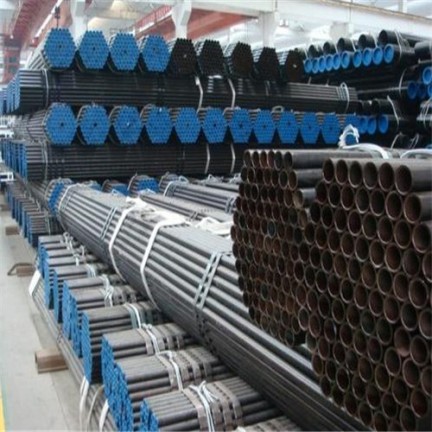
ASTM A53 vs API 5L: Comparison Table
The table below summarizes the key differences between the two standards:
| Aspect | ASTM A53 | API 5L |
| Organization | ASTM International (general/mechanical) | American Petroleum Institute (oil & gas) |
| Scope | Welded & seamless pipe, general pressure & mechanical | Line pipe for fluid transport |
| Grades | Grade A, Grade B | Grade B, X42, X46, X52, X56, X60, X65, X70 |
| Requirement Level | Single level | PSL1 (basic), PSL2 (strict) |
| Additional Tests | Hydrostatic, tensile, bend | PSL2: CVN (Charpy), chemical limits, mandatory NDT |
| Production Methods | Type E (ERW), Type S (seamless), Type F (furnace) | ERW, HFW, seamless, SAW (LSAW/SSAW) |
| Applications | Water, gas, sprinkler, scaffolding, structures | Oil, gas and water transmission; oil & gas facilities |
| Common Certification | MTC per EN 10204 3.1, ISO 9001 | API 5L + MTC, third-party inspection, project docs |
| MOQ | 20-25 tons per container | 20-25 tons per container |
| Lead Time | 15-25 days | 20-30 days (PSL2 longer) |
It is important to understand: API 5L Grade B and ASTM A53 Grade B have almost identical mechanical properties and are often treated as practically interchangeable – but the project specification and inspector determine which standard must be used. Here is a deeper analysis.
Advantages and Limitations of ASTM A53
Advantages of ASTM A53: broad application scope and competitive cost. Used across almost all general piping industries, widely available, with reasonable requirements for commercial and mechanical applications. For water, sprinkler, scaffolding, and structure projects, ASTM A53 Grade B is the default choice accepted by contractors, consultants, and regulators alike.
Limitations: for high-pressure oil and gas transmission lines or sour service environments, ASTM A53 is not designed – oil and gas project specifications almost always require API 5L (often PSL2 with additional tests). ASTM A53 also does not define high-strength grades like X52-X70.
Advantages and Limitations of API 5L
Advantages of API 5L: designed specifically for pressurized fluid transport with adjustable requirements (PSL1/PSL2) and high-strength grades (up to X70+). PSL2 offers stricter chemical control, CVN testing for toughness (important for low-temperature service), and full traceability – standard requirements for oil and gas projects, including LNG and national gas network projects.
Limitations: higher cost (especially PSL2), longer production times, and stricter documentation requirements. Using API 5L for general piping (water, scaffolding) is a budget waste without technical benefit.
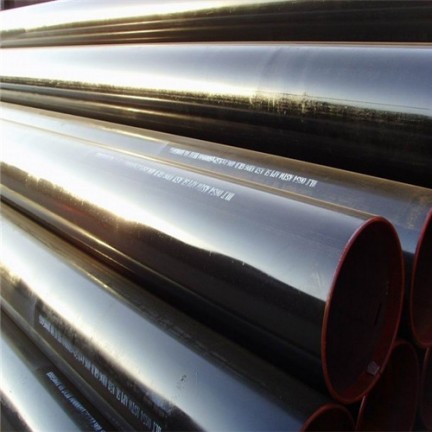
When to Choose ASTM A53
Choose ASTM A53 Grade B for general piping and structures: potable water and wastewater lines, fire sprinkler systems, low-pressure building gas lines, scaffolding, fencing, and light steel structures. If the project specification mentions “ASTM A53” or “A53 Gr B”, use this standard – compliance with project documents matters more than choosing a “better” option.
When to Choose API 5L
Choose API 5L for fluid transmission networks and oil and gas facilities: oil, gas, and high-pressure water transmission and distribution pipelines; oil and gas production facilities; city gas networks; and EPC projects in the energy sector. For critical service, specify PSL2 with CVN testing and appropriate documentation requirements. Projects funded by institutions or with international insurance often explicitly require API 5L.
Price Comparison and Market Availability
For the same size, ASTM A53 Grade B and API 5L Grade B pipe are almost equal in price; significant differences appear for high API 5L grades (X52+) and PSL2 due to additional testing and process control. For Grade B, availability of both is broad from our factory. For large sizes (above 24 inches) or PSL2, we recommend planning lead times of 30-45 days. We prepare combined quotations for projects requiring several standards in one shipment.
Standards, Certification, and SNI Compliance
All our pipe is produced under ISO 9001:2015 with full testing: chemical analysis, tensile, bend, hydrostatic, and for API 5L PSL2, CVN and mandatory NDT. An MTC per EN 10204 3.1 accompanies every shipment. For oil and gas projects in Indonesia, we prepare documents supporting SKK Migas and related regulator requirements; for general piping, SNI supporting documents can be prepared as needed.
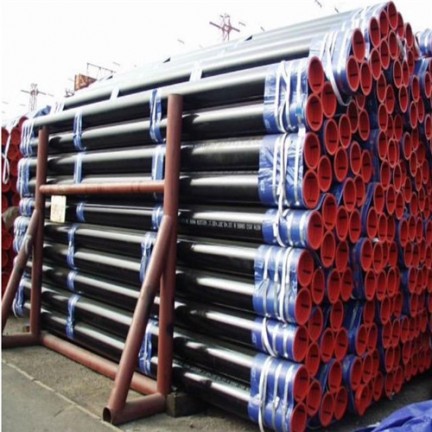
Size Range and Wall Thickness
ASTM A53 pipe is typically ordered in sizes 1/2 inch to 24 inches (DN15-DN600) with schedule thicknesses SCH 10 to SCH 160 – the most common in the Indonesian market is SCH 40 for water and sprinkler. API 5L line pipe is available from 2 inches to 48 inches (above 24 inches is usually LSAW for large projects) with thicknesses per design pressure class. Standard lengths are 6 or 12 meters; for line pipe projects, 12-meter lengths with beveled ends are standard for field welding. Non-standard sizes can be produced to project specification with design approval.
End finish also matters: A53 pipe for water and sprinkler systems is commonly threaded and supplied with couplings, while API 5L line pipe for welded networks uses 30-degree beveled ends. Correct end specification reduces installation time and leakage risk in the field – our technical team can help confirm these details against your project documents from the quotation stage.
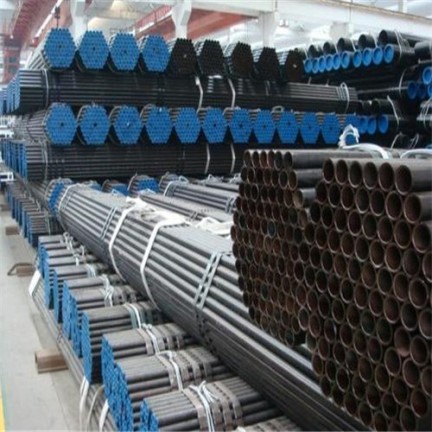
Testing, Documentation, and Project Inspection
The difference in test requirements between the two standards should be understood from the start: ASTM A53 requires tensile, bend, and hydrostatic tests; API 5L PSL1 adds basic-level requirements, and PSL2 mandates CVN (Charpy V-notch) testing at certain thicknesses, stricter chemical composition limits, and mandatory NDT for all pipe. For oil and gas and city gas projects in Indonesia, commonly requested documents include an MTC per EN 10204 3.1, CVN test results, third-party inspection certificates, and in some cases, factory audit reports by international consultants. We regularly host factory audits from clients, consultants, and inspection bodies for both product lines, and prepare all documents per contract and customs requirements.
Applications in Indonesia: From Buildings to Oil and Gas
ASTM A53 Grade B is the dominant standard for building and infrastructure piping in Indonesia – water, sprinkler, and scaffolding systems on construction projects in Jakarta, Surabaya, and other major cities. API 5L is used in city gas networks, oil and gas production facilities, and the development of national energy infrastructure. With growing LNG projects and gas transmission networks, demand for API 5L PSL2 Grade B and X52 pipe in Indonesia continues to grow – and distributors stocking line pipe hold a strong market position.
Decision Factors for Importers and Distributors
Five factors: (1) Project specification – project documents and engineers are the highest authority; (2) Fluid and pressure – high-pressure oil and gas requires API 5L; (3) Inspection requirements – projects with international inspectorates often require PSL2; (4) Cost – A53 for general applications, API 5L only when necessary; (5) Traceability – critical projects need full MTC and heat numbers. Choose a supplier that produces both standards with complete test lines for maximum flexibility.
Common Mistakes and How to Avoid Them
Frequent mistakes: first, assuming ASTM A53 Grade B and API 5L Grade B are “exactly the same” without checking contract requirements – if the project document requires API 5L, use API 5L; substitution without engineer approval can cause material rejection. Second, ordering PSL1 for critical service that should be PSL2 – the difference in CVN testing and traceability is decisive for gas networks and offshore projects. Third, neglecting additional project test requirements (such as PMI testing or hardness tests) until the late stage; confirm all inspection requirements at the quotation stage so production schedules are not disrupted. Clear specification communication from the start is the key to smooth projects.
In addition, keep in mind that certification documents must match the actual shipment: verify that the MTC heat numbers correspond to the pipe delivered, and that third-party inspection reports are issued by accredited bodies. Some projects also require traceability from the original steel mill – confirm with your supplier whether their production line can provide mill-level traceability documentation for the grades you order.
Frequently Asked Questions (FAQ)
Answers to common questions:
1. Is API 5L Grade B the same as ASTM A53 Grade B?
The mechanical properties are almost identical (minimum yield strength of 35 ksi for both), and the two are often used interchangeably in practice. However, API 5L has additional line pipe requirements (traceability, PSL2 options) that ASTM A53 does not have.
2. Which standard is better for gas networks?
For transmission and distribution gas networks (including city gas), API 5L is the right standard. For low-pressure gas piping inside buildings, ASTM A53 is often used and accepted.
3. What is the difference between PSL1 and PSL2?
PSL2 has stricter requirements: chemical composition limits (carbon, phosphorus, sulfur), CVN (Charpy) toughness testing, NDT requirements, and full traceability. PSL2 is generally required for critical and offshore service.
4. Can ASTM A53 pipe be used for oil and gas?
It is sometimes used for light, low-pressure applications, but formal oil and gas projects require API 5L (or equivalent standards like API 5CT for casing) because of stricter requirements and traceability.
5. What do the numbers in grades X52, X60, X65 mean?
The numbers indicate minimum yield strength in ksi: X52 = 52 ksi, X60 = 60 ksi, X65 = 65 ksi. Higher numbers mean stronger pipe.
6. How do I order A53 and API 5L pipe?
Send your specification (standard, grade, PSL, size, SCH, length, quantity, port) via WhatsApp +86 186 2208 8833 or the contact form. Our team responds within 24 hours with an official quotation and technical advice.
How to Order from the Sino East Steel Factory
The ordering process: (1) Send standard and grade specifications; (2) Receive a technical and price quotation within 24 hours; (3) Confirm the contract; (4) Production with progress reports; (5) Optional SGS/BV/TUV inspection; (6) Shipping to Indonesian ports. Before ordering, make sure all technical requirements – including additional tests, documents, and inspection – are confirmed in the contract; our team provides free specification review to help you avoid costly procurement errors. Learn more: Seamless Pipe Manufacturer, ERW Pipe vs Seamless Pipe, and Galvanized vs Seamless Pipe. For projects that require additional testing such as PMI, hardness, or ultrasonic inspection, please list all requirements in your inquiry so our engineers can confirm feasibility and pricing from the quotation stage. Our team is ready to answer your questions and help you complete your specification.
Sources & References
Standards and data referenced on this page: