Last updated: 2026-10-07 · Sino East Steel Technical Team
Pre-galvanized steel pipe is a welded pipe formed from steel strip or coil that was already zinc-coated before the pipe was made. Instead of dipping a finished pipe into molten zinc, the mill galvanizes the flat steel first, slits it to width, then roll-forms and welds it into tube — which is why the zinc on a pre-galvanized pipe covers the outside and inside surfaces evenly but stays thin, normally Z60 to Z275 (60–275 g/m² total both sides) per EN 10346.
That single manufacturing detail explains almost every commercial question Indonesian buyers ask us: why pre-galvanized pipe costs noticeably less per meter than hot-dip galvanized pipe, why it is the default choice for electrical conduit, greenhouse frames, HVAC ducting and light structures, and why it must be replaced by hot-dip galvanized or seamless pipe in buried, immersed or pressure applications. This guide sets out the specifications, the comparison data, the ordering checklist and the logistics for Indonesian projects, based on the pipe we manufacture and export from Tianjin, China.
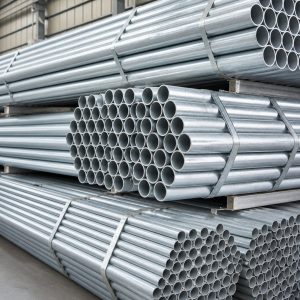
How Pre-Galvanized Pipe Is Made (and Why It Matters)
The production route is straightforward, and each step affects what you receive on site:
- Zinc coating on coil. Cold-rolled steel coil passes through a continuous hot-dip galvanizing line and receives a controlled zinc or zinc-iron coating. The coating mass is stated as a Z-class: Z60, Z100, Z120, Z180, Z275 (grams per square meter, both surfaces combined).
- Slitting. The coated coil is slit to the exact strip width needed for the finished tube diameter and wall thickness.
- Roll forming and ERW welding. The strip is formed into a cylinder and welded longitudinally by high-frequency electric resistance welding (ERW). The weld seam is the only area where coating continuity depends on process control, which is why a proper weld-zone re-coat or post-treatment matters.
- Sizing, straightening and cutting. Tube is sized to OD and wall tolerance, straightened, then cut to 6 m standard length or to your specified length.
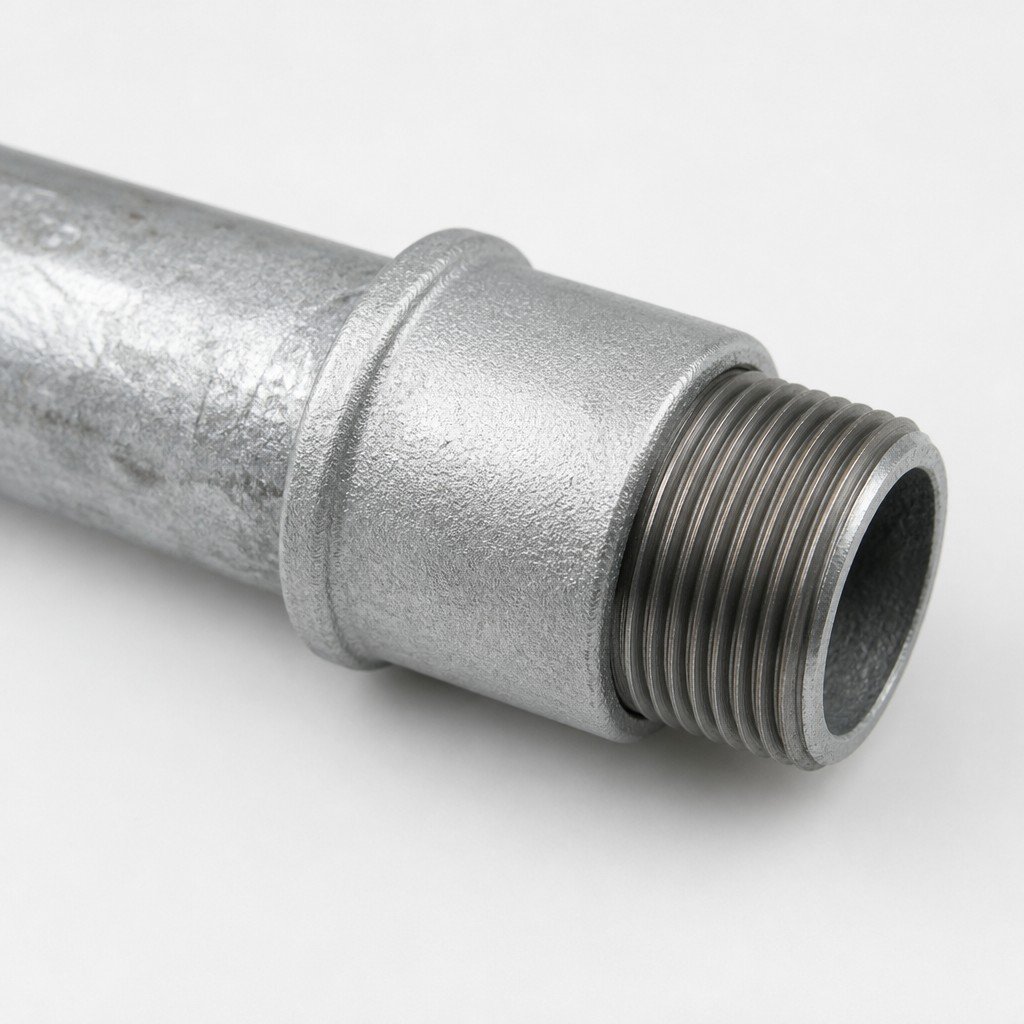
- End finishing. Plain end, beveled end, threaded and coupled (BS 1387 / EN 10255 threads), or grooved for mechanical couplings.
Because the zinc is applied to flat steel, the coating is uniform and thin — typically 7–20 µm per surface depending on Z-class. Hot-dip galvanizing after fabrication (EN ISO 1461) instead builds 45–85 µm on the finished article, roughly three to eight times thicker. That gap is the whole story of cost, corrosion life and application limits.
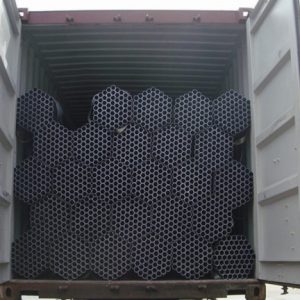
Pre-Galvanized vs Hot-Dip Galvanized Pipe: The Comparison Indonesian Buyers Need
These two products look similar in a warehouse and behave very differently on site. The table below is the reference we send with quotations.
| Criterion | Pre-galvanized pipe | Hot-dip galvanized pipe |
|---|---|---|
| Coating applied | To steel coil before forming (EN 10346) | To finished pipe after fabrication (EN ISO 1461) |
| Typical coating mass | Z60 – Z275 (60–275 g/m² both sides) | 610 g/m² and above (≈ 45–85 µm per surface) |
| Relative thickness | 7–20 µm per surface | 45–85 µm per surface — roughly 3–8× thicker |
| Cost per meter | Lower — less zinc, single pass coating | Higher — additional process, handling and inspection |
| Corrosion life | Suits indoor, sheltered and light outdoor service; several years to a decade in mild conditions | Suits exposed, industrial and coastal service; multi-decade service life when designed correctly |
| Coastal / marine exposure | Not recommended unless additional painting or coating is applied | Recommended, with coating mass increased for high-chloride environments |
| Buried or immersed service | Never — coating is too thin and cannot be inspected or repaired | Yes, with the appropriate coating class and proper treatment of field joints |
| Pressure lines | Limited to low-pressure water, air and conduit duties | Accepted for water mains and services when the standard allows |
| Weldability | Easy; thin zinc produces less fume but welding burns coating at the joint | Requires weld-zone coating removal and repair; more fume |
| Appearance | Smooth, bright, uniform spangle | Thicker, sometimes uneven zinc with visible drain marks |
| Threading | Threads cut through the coating and need zinc-rich repair paint | Threads cut through a thicker coating and are more tolerant of field conditions |
| Typical use in Indonesia | Electrical conduit and cable tray, greenhouse and hydroponic frames, HVAC ducting, irrigation, light racking and fencing | Water supply piping, scaffolding, coastal and industrial structures, exposed steelwork |
| Lead time from our mill | Generally faster — standard sizes often ex-stock | Longer, because of the galvanizing batch schedule |
The practical rule we give to Indonesian contractors: use pre-galvanized for dry, sheltered or light-duty service where the budget matters, and step up to hot-dip galvanized wherever the pipe will be buried, immersed, exposed to sea air or asked to carry pressure. If you are comparing against other pipe families instead of coatings, our galvanized vs seamless pipe comparison covers that decision from the other direction.
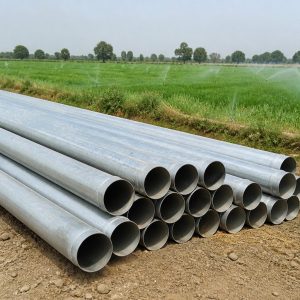
Specifications We Manufacture
The table below lists the standard ranges we produce and stock. Sizes, wall thickness and zinc classes outside these ranges can usually be rolled to order — send us the schedule and we will confirm.
| Standards | BS 1387 (light / medium / heavy), EN 10255, ASTM A53 Grade A, EN 10219 for structural tube |
|---|---|
| Nominal sizes | DN15 – DN150 (1/2″ – 6″); OD 21.3 mm – 168.3 mm |
| Wall thickness | 1.8 mm – 5.0 mm depending on series and duty |
| Zinc coating | Z60 / Z100 / Z120 / Z180 / Z275 (EN 10346); custom classes on request |
| Length | 6 m standard; 5.8 m, 12 m or cut-to-length to your drawing |
| End finish | Plain end, beveled end, threaded and coupled (BS 1387 / EN 10255), grooved |
| Surface | Galvanized as standard; optional chromate passivation or oiling for humid storage |
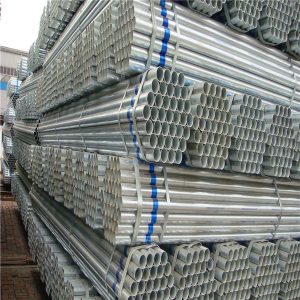
| Packing | Hexagonal or square bundles, steel strapping, end caps, bundle tags with heat number and weight |
| Documentation | Mill Test Certificate EN 10204 3.1 per heat number, packing list, loading photos |
| Container loading | 20′ ≈ 22–24 t for 6 m lengths; 40′ high-cube ≈ 26–28 t; 12 m lengths on flat rack |
Where dimensional tolerances are critical — for example when pipe must fit existing clamps, couplings or conveyor frames — our galvanized pipe dimensions and wall thickness guide gives the reference figures, or simply send the drawing and we will match it.
Where Pre-Galvanized Pipe Fits in Indonesian Projects
Applications where it is the right choice
- Electrical conduit and cable tray support. Indoor and sheltered runs where the coating only needs to resist condensation and occasional humidity.
- Greenhouse, hydroponic and shade-net frames. A large and growing segment in Java and Sumatra; light, easy to drill and assemble on site.
- HVAC ducting and ventilation supports. Zinc coating protects the pipe in conditioned spaces without the cost of hot-dip.
- Irrigation and drainage lines. Low-pressure water distribution where pipe is above ground or in inspectionable trenches.
- Light racking, shelving, fencing and guard rails. Where appearance and cost dominate and mechanical loads are modest.
- Prefabricated structures and partition frames. The pipe arrives cut and coated, ready for bolted assembly.
Applications where you must specify hot-dip galvanized instead
- Pipe to be buried in soil or immersed in water, including seawater and brine lines.
- Coastal and marine structures within salt-spray range, unless the assembly is painted over with a suitable system.
- Pressure piping for water mains, fire systems or process service that specifies a galvanized schedule.
- Scaffolding and load-bearing access structures, where standards such as EN 39 / EN 74 call for heavier coating and proof loading.
For those cases, our hot-dip galvanized steel pipe range includes BS 1387 medium and heavy series, threaded and coupled pipe, and scaffold-grade tube.
How to Specify Pre-Galvanized Pipe Correctly
Most quality disputes in this product line come from an incomplete specification, not from the mill. Include these six items in your enquiry:
- Standard and series. BS 1387 light, medium or heavy — or ASTM A53 Grade A, or EN 10255. The series sets the wall thickness, and wall thickness sets both pressure capability and weight per meter.
- Nominal size and OD. State DN and the outside diameter, since local sizing conventions vary between markets.
- Zinc class. Z60 for indoor conduit, Z120–Z180 for general outdoor shelter, Z275 where extra margin is wanted. The price difference between classes is real but small relative to the cost of premature corrosion.
- End finish. Plain, beveled, threaded and coupled, or grooved — this affects both the unit price and the site labour required.
- Length and tolerance. 6 m standard, or cut-to-length. Long lengths above 6 m consume more container volume per tonne and may need flat rack.
- Certificates and inspection. State whether you require MTC EN 10204 3.1 only, or third-party inspection by SGS, BV or TÜV before loading.
A complete enquiry can be one page. Send it and we return a quotation with weight per meter, bundle configuration, number of containers and lead time — not just a price per tonne.
Need pre-galvanized pipe pricing for an Indonesian project? Send your schedule — standard, size, zinc class, quantity and destination port — and our export team replies within 24 hours with an FOB/CFR quotation, container plan and production lead time.
Price Factors and Cost Comparison
Pre-galvanized pipe is priced per tonne, and the tonne price moves with three inputs: hot-rolled coil (the base steel), zinc (the coating), and freight to your port. Within the same market window, the following factors decide the price you are quoted:
- Zinc class. Moving from Z60 to Z275 adds coating mass, so the price per tonne rises even though the steel is identical.
- Wall thickness and series. Heavy series costs more per tonne because it consumes more steel per meter, but fewer meters are needed for the same duty.
- End finish. Threading and coupling adds machining, coupling steel and labour.
- Order volume. Mixed-size orders of a full container (22–24 t) are the natural unit; project volumes of 100 t and above justify better terms.
- Incoterm and port. FOB Tianjin is the baseline. CFR and CIF to Tanjung Priok, Tanjung Perak, Belawan or Makassar add freight and insurance, which we quote transparently per container.
We deliberately do not publish a fixed price list on this page, because a price that is three months old is worse than no price at all — it wastes your time and ours. For orientation on how the numbers have moved, see our galvanized steel pipe price guide, then ask us for the current quotation for your exact schedule.
Quality Control and Documentation
Every batch of pre-galvanized pipe we ship passes the following checks before it is banded:
- Chemical analysis by spectrometer on each heat, with results recorded against the heat number.
- Mechanical testing — tensile, yield and elongation, plus bend or flattening tests as required by the standard.
- Coating mass verification by gravimetric stripping (EN ISO 1460 method) on samples from each coating class.
- Dimensional inspection of outside diameter, wall thickness, ovality and straightness.
- Hydrostatic or eddy-current testing on pressure-duty tube, at the frequency the standard requires.
- Thread gauging on threaded and coupled products, with couplings supplied to the matching standard.
- Final documentation — Mill Test Certificate EN 10204 3.1, packing list and loading photographs, with third-party inspection available on request.
Our management system is certified to ISO 9001:2015, and we can arrange SGS, BV or TÜV inspection before loading when your project owner or QC consultant requires independent verification.
Shipping and Logistics to Indonesia
We ship pre-galvanized pipe to Tanjung Priok (Jakarta), Tanjung Perak (Surabaya), Belawan (Medan) and Makassar, and can arrange inland delivery through your forwarder. Typical parameters:
- Production: 20–45 days after deposit, depending on size mix, coating class and the galvanizing schedule for hot-dip items in the same order.
- Ocean transit: 7–12 days to the main Indonesian ports, plus port and customs clearance time on arrival.
- Loading: a 20′ container takes about 22–24 t of 6 m pipe; 40′ high-cube about 26–28 t. Longer lengths reduce tonnes per container and may require flat rack.
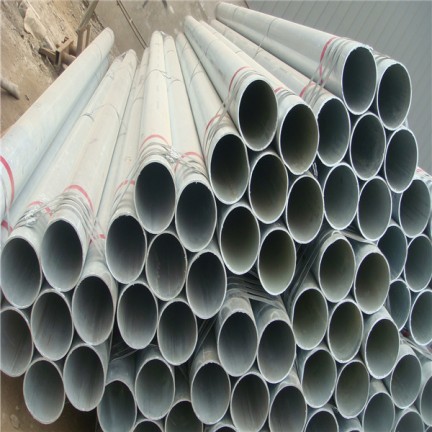
- Protection in transit: end caps, bundle strapping and, on request, desiccant and lining paper for humid routes to prevent white rust during the voyage.
White rust — the white zinc oxide film that can form on freshly galvanized surfaces in humid conditions — is the most common transit complaint in this product family. We manage it with proper cooling time before packing, dry bundling and ventilation in the container, and we will tell you honestly when a shipment should be scheduled differently to avoid it.
Frequently Asked Questions
What is the difference between pre-galvanized and hot-dip galvanized pipe?
Pre-galvanized pipe is formed from steel that was zinc-coated before the tube was welded, giving a thin uniform coating of about 7–20 µm per surface (Z60–Z275 total coating mass). Hot-dip galvanized pipe is coated after fabrication, giving roughly 45–85 µm per surface (610 g/m² and above). Pre-galvanized costs less and suits light or sheltered duty; hot-dip lasts far longer in exposed, coastal, buried or immersed service.
Is pre-galvanized pipe suitable for outdoor use in Indonesia?
It is suitable for sheltered outdoor use and for conditions where the coating is not continuously wet. For exposed coastal sites, salt spray, buried lines or immersion, specify hot-dip galvanized pipe, or use pre-galvanized pipe with an additional paint system that is compatible with zinc substrates.
What is the minimum order quantity?
A realistic trial order is around 10 tonnes or one 20-foot container for a mixed-size bundle. Project orders of 25 tonnes and above receive better per-tonne pricing, and we routinely quote 100–500 t schedules for contractors and distributors.
Which standards can you supply, and are certificates included?
We produce to BS 1387 (light, medium, heavy), EN 10255, ASTM A53 Grade A and EN 10219, and each shipment includes a Mill Test Certificate EN 10204 3.1 per heat number listing chemical composition and mechanical properties, plus packing list and loading photographs.
How long does delivery to Indonesia take?
Production takes 20–45 days depending on size mix and coating class, and ocean transit to Tanjung Priok, Tanjung Perak, Belawan or Makassar takes 7–12 days, followed by customs clearance at destination.
Can you cut, thread or groove the pipe before shipping?
Yes. We cut to length, thread and couple to BS 1387 / EN 10255, bevel for welding, or groove for mechanical couplings, and we mark bundles by project so material is identifiable on site.
Which zinc class should I choose?
For indoor electrical conduit and dry interior use, Z60–Z120 is normally sufficient. For general sheltered outdoor service and humid tropical storage, Z180 gives useful margin. Where the pipe will see frequent moisture or long storage before installation, choose Z275 or step up to hot-dip galvanizing.
How do I verify coating quality before payment?
Ask for the coating mass result on the Mill Test Certificate, then request third-party inspection — SGS, BV, TÜV or your own QC consultant — with gravimetric coating tests on samples from the production batch. We schedule inspection before loading so you receive the report with the shipping documents.
Get Your Pre-Galvanized Pipe Quotation
Sino East Steel manufactures and exports pre-galvanized and hot-dip galvanized steel pipe from Tianjin, China, supplying contractors, distributors and fabricators across Indonesia since 2008. Send your pipe schedule — standard, size, wall thickness, zinc class, quantity and destination port — and we will return a complete quotation with weights, container plan and delivery schedule within one working day.
Send your schedule and get an answer within 24 hours. No obligation, no stale price list — a quotation built on your actual sizes and volume.
Sources & References
Standards and data referenced on this page: