Last updated: 2026-09-19 · Sino East Steel Technical Team
Galvanized Steel Pipe vs Seamless Steel Pipe: the complete guide for importers and contractors. Choosing between galvanized steel pipe and seamless steel pipe is one of the most frequent technical decisions buyers face in the steel market. Both are high-quality steel products supplied factory-direct by Sino East Steel from Daqiuzhuang Industrial Park, Jinghai, Tianjin, China – but they are designed for different functions, standards, and installation environments. This article compares the two products in depth: manufacturing process, mechanical strength, corrosion resistance, size range, cost, availability, and typical applications in construction, infrastructure, and industrial projects.
As a manufacturer with 500,000 metric tons of annual capacity and 18+ years of export experience to 50+ countries, we supply galvanized pipe to ASTM A53 / EN 10219 / BS 1387 and seamless pipe to ASTM A106 / ASTM A53 / API 5L. Every shipment includes a Mill Test Certificate (MTC) per EN 10204 3.1, is produced under an ISO 9001:2015 quality system, and can be inspected by SGS, BV, or TUV. For Indonesian projects we support SNI documentation and sea freight of 18-25 days to Tanjung Priok (Jakarta), Tanjung Perak (Surabaya), Belawan (Medan), and Makassar.
What Are Galvanized Steel Pipe and Seamless Steel Pipe?
Galvanized steel pipe is carbon steel pipe (typically produced by ERW – Electric Resistance Welding) coated with a zinc layer through hot-dip galvanizing. The zinc coating of 170-350 g/m2 per ISO 1461 provides cathodic protection: zinc is more reactive than steel, so corrosion attacks the zinc layer first and protects the steel underneath. This makes galvanized pipe the preferred choice for applications exposed to water and humid environments, such as potable water lines, sprinkler systems, fencing, and outdoor structures.
Seamless steel pipe is produced without any welded joint – solid steel billets are heated, pierced, and rolled into hollow pipe. The absence of a weld seam means seamless pipe has more uniform strength and pressure resistance across the entire cross-section, making it the standard for high-pressure applications such as boilers, heat exchangers, hydraulic systems, and oil and gas pipelines (API 5L line pipe). Seamless pipe is generally supplied uncoated (black pipe) or to customer specification.
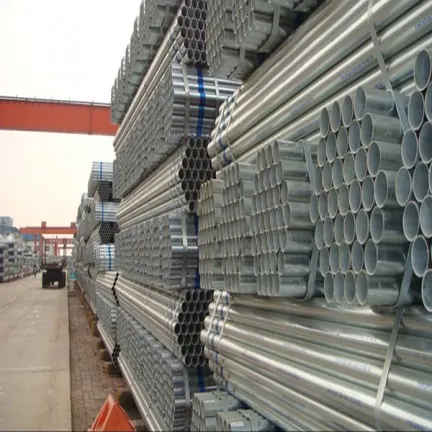
Galvanized vs Seamless Pipe: Comparison Table
The table below summarizes the key differences you need to understand before setting specifications:
| Aspect | Galvanized Steel Pipe | Seamless Steel Pipe |
| Production Method | ERW (electric resistance welding) + hot-dip galvanizing | Billet piercing and rolling, no welding |
| Common Standards | ASTM A53, EN 10219, BS 1387, ISO 1461 | ASTM A106, ASTM A53, API 5L |
| Corrosion Protection | Excellent (cathodic zinc coating) | Depends on added coating; usually uncoated |
| Strength & Pressure | Adequate for general service; not for very high pressure | Superior: uniform across cross-section |
| Size Range | OD 1/2 in – 12 in, wall 0.6-16 mm | OD 1/4 in – 24 in, wall up to 50 mm+ |
| Cost | More economical (continuous process) | Higher (more complex process) |
| Typical Applications | Water, sprinkler, fencing, structures, general piping | Boilers, hydraulics, oil & gas, high pressure |
| MOQ | 20-25 tons per container | 20-25 tons per container |
| Lead Time | 15-25 days | 15-25 days |
The final decision is not about which is “better” in absolute terms, but about operating conditions, project standards, and budget. The next two sections discuss the strengths and limitations of each product honestly and technically.
Advantages and Limitations of Galvanized Steel Pipe
The main advantage of galvanized pipe is affordable corrosion resistance. The zinc layer provides active cathodic protection: if the coating is scratched, the zinc still protects the exposed steel. For tropical and coastal environments, galvanized pipe with a 275-350 g/m2 coating delivers a service life of 25-50 years in the right applications. In addition, the continuous ERW process keeps cost per ton lower and stock availability better for common sizes 1/2-6 inches.
Limitations: the zinc coating degrades at high temperatures (above 200°C), so galvanized pipe is not suitable for steam lines or hot service. Welding galvanized pipe requires special treatment (removing the zinc coating at the weld area and using fume respirators because zinc fumes are toxic). For high-pressure applications above 2.5 MPa, standards generally direct you to seamless pipe or higher-grade welded pipe.
Advantages and Limitations of Seamless Steel Pipe
The main advantage of seamless pipe is uniform strength and reliability under pressure. Without a weld seam, there is no potential weak point where cracking can initiate, making seamless pipe the industry standard for boilers, heat exchangers, hydraulic systems, and oil and gas line pipe. The ability to withstand higher internal pressure with thinner walls also saves material in high-pressure applications.
Limitations: production costs are higher (piercing and rolling are slower and waste more material), so the price per ton is 10-25% above ERW pipe of the same size. Uncoated seamless pipe is more vulnerable to corrosion in humid environments without additional protection. For general applications (water, structures, fencing), using seamless is simply overspending without the technical benefit required.
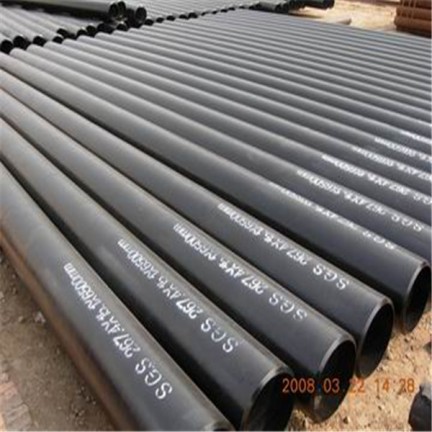
When to Choose Galvanized Steel Pipe
Choose galvanized pipe when your project needs standard corrosion protection at optimal cost: potable water and wastewater lines, fire sprinkler systems, fencing and railing, light structures, canopies, cable trays, and HVAC piping. For government and contractor projects in Indonesia that require SNI, we provide supporting documentation and specifications that comply with regulations. In coastal environments, use a zinc coating of 275 g/m2 and above, and consider coating-thickness inspection before shipment.
When to Choose Seamless Steel Pipe
Choose seamless pipe when there is a demanding pressure, temperature, or reliability requirement: boiler and power plant systems, heat exchangers, high-pressure hydraulic systems, oil and gas pipelines (API 5L PSL1/PSL2), chemical and petrochemical industries, and offshore applications. EPC projects in the energy sector almost always specify seamless pipe for critical lines with MTC and third-party inspection. We accept seamless orders with fully traceable heat numbers.
Price Comparison and Market Availability
In the Indonesian market, the price gap between galvanized and seamless pipe is influenced by international zinc prices (LME zinc), billet costs, and exchange rates. As a general guide: galvanized pipe 2-3 inches costs roughly 10-20% less than seamless pipe of the same size without coating. However, a fair comparison must account for added protection costs: if seamless pipe requires painting or anti-corrosion coating for certain applications, the gap narrows. For current pricing (FOB Tianjin or CIF Tanjung Priok), send your full specification – our team responds within 24 hours with stable pricing for long-term contracts.
Standards, Certification, and SNI Compliance
Our galvanized pipe is produced to ASTM A53 Grade B, EN 10219, BS 1387, and ISO 1461 for zinc coating weight; seamless pipe to ASTM A106 Grade B and API 5L PSL1/PSL2. All production runs under an ISO 9001:2015 quality system, and every batch is tested: chemical analysis, tensile, bend, hydrostatic, and for galvanized pipe, coating weight and zinc adhesion tests. An MTC per EN 10204 3.1 accompanies every shipment, and SGS/BV/TUV inspection can be arranged at the mill before loading.
For regulated projects in Indonesia, we prepare documentation packages that support SNI certification, including test data, mill certificates, and the import documents required by customs. Our technical team can help you map project standards to the correct shipping specification from the quotation stage.
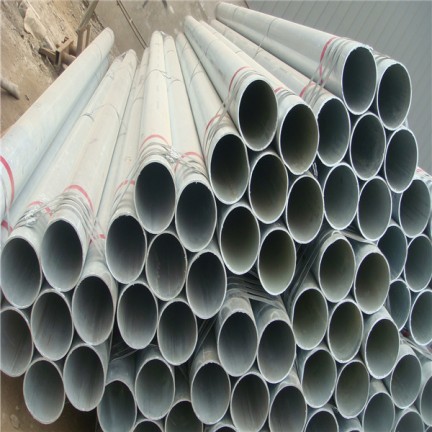
Applications in Indonesia: Construction and Industry
In Indonesia, galvanized pipe dominates residential and commercial water lines, fire protection (sprinkler) systems, and support structures in factories and warehouses. Seamless pipe is used in the energy sector: power plants, oil and gas facilities, refineries, and chemical industries in areas such as Cilegon, Balikpapan, and Dumai. Both products are also widely used in government-funded water and irrigation infrastructure projects, where specifications reference SNI and international standards. We have shipped hundreds of containers to importers and distributors in Jakarta, Surabaya, Medan, and Makassar with consistent documentation.
Decision Factors for Importers and Distributors
Five key factors in the decision: (1) Operating conditions – pressure, temperature, and corrosive environment; (2) Project standards – engineering specifications and SNI requirements; (3) Total cost of ownership – initial price plus protection and maintenance costs; (4) Size availability – non-standard sizes and thick walls are easier in seamless; (5) Supply reliability – choose a supplier that controls production directly for consistent quality and schedules. Sino East Steel supplies both from the same factory, so you can combine requirements in one mixed container under one quality responsibility.
Size Specifications, Documentation, and Inspection
Our galvanized pipe is supplied with an outer diameter of 1/2 inch to 12 inches and wall thickness of 0.6-16 mm, while seamless pipe is available from 1/4 inch to 24 inches with walls up to 50 mm for special sizes. Standard lengths are 6 meters or 12 meters; non-standard lengths can be produced on request. Both products can be combined in one 20-ft or 40-ft container with secure separation and bundling – a common strategy for Indonesian distributors to optimize freight costs and stock rotation.
Every shipment includes an MTC per EN 10204 3.1 listing the heat number, chemical composition, and mechanical test results. SGS, BV, or TUV inspection can be arranged before loading in Tianjin, and inspection photos and reports are sent to the buyer before departure. For SNI-regulated projects, supporting documents are prepared from the quotation stage, including test data and mill certificates.
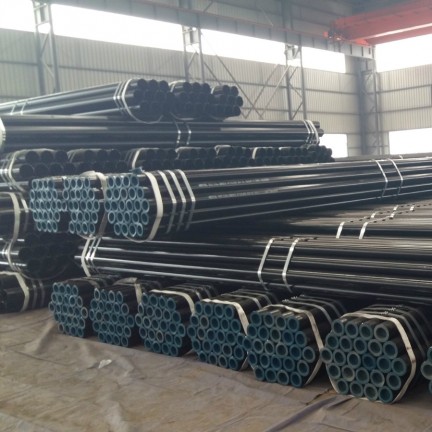
Common Mistakes When Choosing Pipe and How to Avoid Them
Three mistakes we see most often from buyers: first, using seamless pipe for water and general structures simply because “seamless is stronger” – this wastes 10-25% of the budget without technical benefit; second, using galvanized pipe for steam or service above 200°C, where the zinc coating degrades and actually accelerates localized corrosion; third, neglecting SNI and MTC documentation until the import stage, which delays customs clearance and project verification. The solution is simple: define specifications based on working pressure, installation environment, and project requirements from the start – and ask your supplier to state standards, heat numbers, and documents explicitly in the quotation.
Frequently Asked Questions (FAQ)
Answers to the questions Indonesian importers ask most often:
1. Is galvanized pipe stronger than seamless pipe?
Not necessarily. The strength of galvanized pipe is generally equivalent to its base steel grade (e.g., ASTM A53 Grade B), while seamless pipe has better strength uniformity because there is no weld seam. For high-pressure applications, seamless pipe is more reliable; for structural and general water applications, galvanized pipe is sufficient and more economical.
2. Why is seamless pipe more expensive?
The seamless production process (billet piercing and rolling) is more complex, slower, and wastes more material than the continuous ERW process. Therefore the price per ton is higher, especially for small and medium sizes.
3. Can galvanized pipe be welded?
Yes, but the zinc coating must be removed around the weld area, and welding produces toxic zinc fumes, so proper ventilation and respirators are mandatory. After welding, the area needs to be re-protected with zinc-rich paint or galvanizing repair methods.
4. Does seamless pipe need to be galvanized?
If seamless pipe is used in humid or coastal environments without other protection systems, galvanizing or additional coating is recommended. However, high-pressure and high-temperature applications generally do not use galvanizing because the zinc coating degrades above 200°C.
5. What is the difference between ASTM A53 and ASTM A106 for seamless pipe?
ASTM A53 covers welded and seamless pipe for general pressure service, while ASTM A106 is specifically seamless carbon steel pipe for high-temperature service. The two are often interchanged in the field, but A106 has stricter chemical and testing requirements.
6. How do I get a quotation for both products?
Send your specification (product, size, wall thickness, length, grade, quantity, and destination port) via the contact form or WhatsApp +86 186 2208 8833. Our team responds within 24 hours with an FOB Tianjin or CIF quotation to Indonesian ports.
How to Order from the Sino East Steel Factory
The ordering process is simple: (1) Send technical specifications and quantities; (2) Receive an official FOB/CIF quotation within 24 hours; (3) Confirm and sign the contract; (4) Production in 15-25 days with progress reports; (5) Optional SGS/BV/TUV inspection before loading; (6) Shipping in 18-25 days to your Indonesian port with full documentation. Explore related guides: Galvanized Pipe Manufacturer, Seamless Pipe Manufacturer, and ERW Pipe vs Seamless Pipe.
Related reading: Pre-Galvanized Steel Pipe for Indonesia: 2026 B2B Buying Guide — coating classes Z60–Z275, BS 1387 and ASTM A53 sizes, and when to specify hot-dip galvanized instead.
Sources & References
Standards and data referenced on this page: